
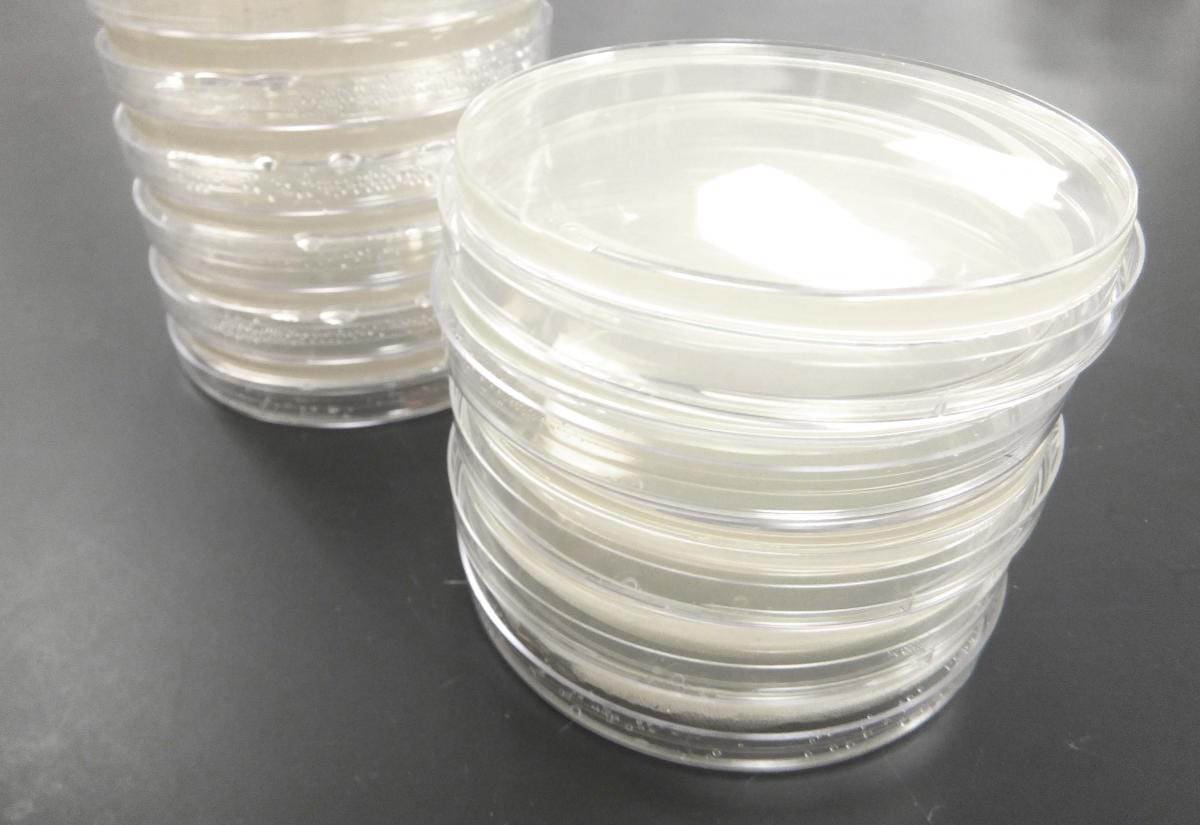
What Is The ASTM E2315 Kill-Rate Test?
The ASTM E2315 Time-Kill Test is a versatile procedure used to evaluate the effectiveness of disinfectants and other liquid antimicrobial agents. It involves directly inoculating a liquid disinfectant with a specific microorganism and measuring the reduction in microbial viability over various periods of time.
With Microchem Laboratory a Liquid Suspension Time-Kill test procedure is highly versatile and catered directly to the study sponsor’s needs.
ASTM E2315 Kill-Rate Test – Procedure at a Glance
 Kill rate assays per ASTM E2315 begin with the direct inoculation of a volume of the disinfectant in question with a specified representative organism. After a specified contact time the system is neutralized and the presence of microorganisms is monitored and quantified following a period of incubation. The microbial growth is compared to that of an untested enumeration control to determine the total reduction.From the resulting data, a slope of the disinfectant’s kill-rate is produced. Typical results of this test are a chart of kill rate over time, expressed as log reduction over time.
Beyond that, many different test parameters can be altered to better match the real-world use of the disinfectant. These include temperature, the ratio of disinfectant to inoculum, the “soil load,” and many other possibilities. Due to the direct contact between disinfectant and inoculum, the Liquid Suspension Time-Kill is most adept at modeling the efficacy of disinfectants used in liquid or submersion settings; however, the Liquid Suspension Time-Kill is often tested at an R&D level to gather preliminary, best-case data on a disinfectant’s antimicrobial efficacy.
ASTM E2315 Kill-Rate Test – Microchem Laboratory’s Expertise
Microchem Laboratory has a long history of performing ASTM E2315 Kill-Rate Testing, generating reproducible data that our clients can count on.